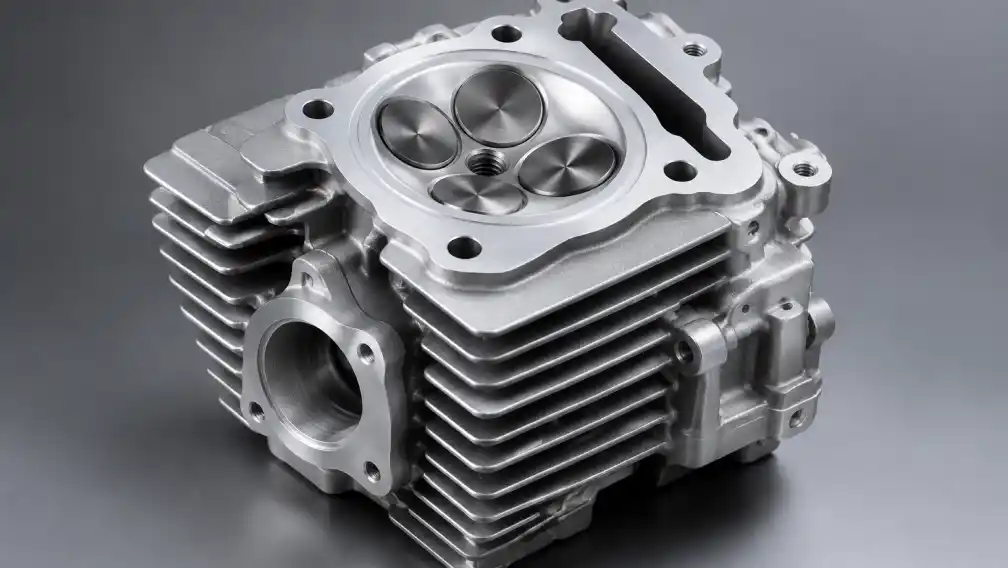
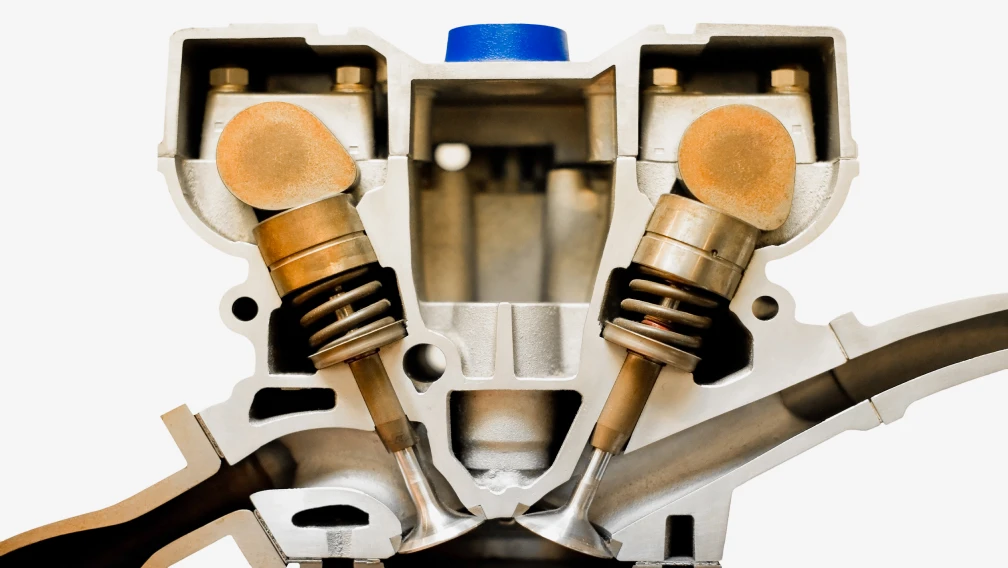
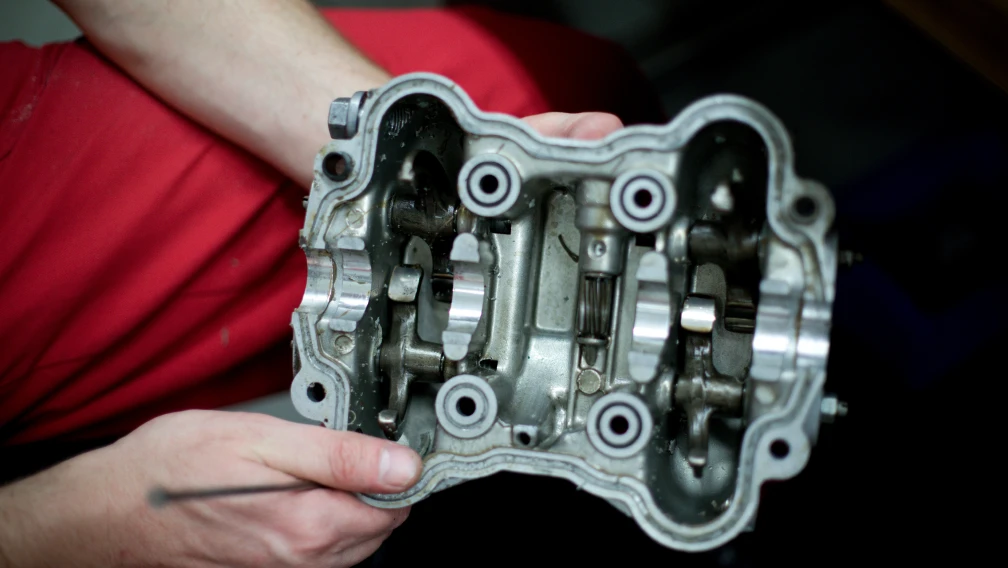
Every motorcycle cylinder head starts as aluminum, but which aluminum decides most of what follows. The alloy sets the ceiling for compression ratio, the welding and repair options, the fin thickness a casting can carry, and the price a distributor pays per unit. Choose well and the head disappears into the product line. Choose poorly and the problems arrive as warranty claims, cracked bridges and pistons that tell stories nobody wants to read.
This guide compares the two alloys that dominate motorcycle cylinder head production — ADC12 and A356 — from the standpoint of a manufacturer that casts and machines both. It covers what each alloy does well, where each one runs out, how the choice shifts by application, and what documentation a buyer should expect with every batch.
What the Alloy Actually Decides
A cylinder head lives a harder life than almost any other casting on the bike. The combustion chamber surface cycles past 300 degrees Celsius, the valve bridge sees the highest sustained temperatures in the engine, and the deck must hold flatness through thousands of heat cycles. Three alloy properties carry most of that burden.
The first is strength at temperature. Yield strength measured at room temperature means little; what matters is how much remains at 150 to 200 degrees, where the deck and bridge actually work. The second is thermal conductivity, which sets how fast heat moves from the chamber into the fins or coolant. The third is castability — how completely the molten alloy fills thin fins, jacket walls and bridge sections without porosity. No alloy wins all three, which is why the choice exists.
ADC12: The Die-Casting Workhorse
ADC12 is a high-silicon aluminum die-casting alloy, roughly equivalent to A383 in the ASTM system, and it is the default material for high-volume motorcycle heads worldwide. Its silicon content — around ten to twelve percent — gives it outstanding fluidity. Thin fins, complex jacket cores and fine surface detail all fill reliably at production cycle times, which is why commuter platforms by the million run ADC12 heads.
Where ADC12 wins
Cost and consistency at volume. High-pressure die casting cycles fast, holds tight as-cast dimensions and needs minimal draft compensation, so unit price stays low and part-to-part variation stays small. Corrosion resistance is good, machinability is excellent, and the as-cast surface takes machining cleanly. For commuter, scooter and small-displacement platforms — the segment our dirt bike cylinder heads and commuter programs serve at volume — ADC12 is usually the correct answer.
Where ADC12 runs out
Two limits matter to buyers. First, ADC12 is generally used as-cast; the dissolved gas and intermetallic content from the die-casting process make full T6 heat treatment impractical, so strength at elevated temperature stays modest. Second, weld repair is unreliable on die castings — porosity in the weld zone turns a repair into a future crack. For stock-spec replacement heads neither limit is a problem. For high-compression builds, sustained racing duty or any application that may need weld repair, they are decisive.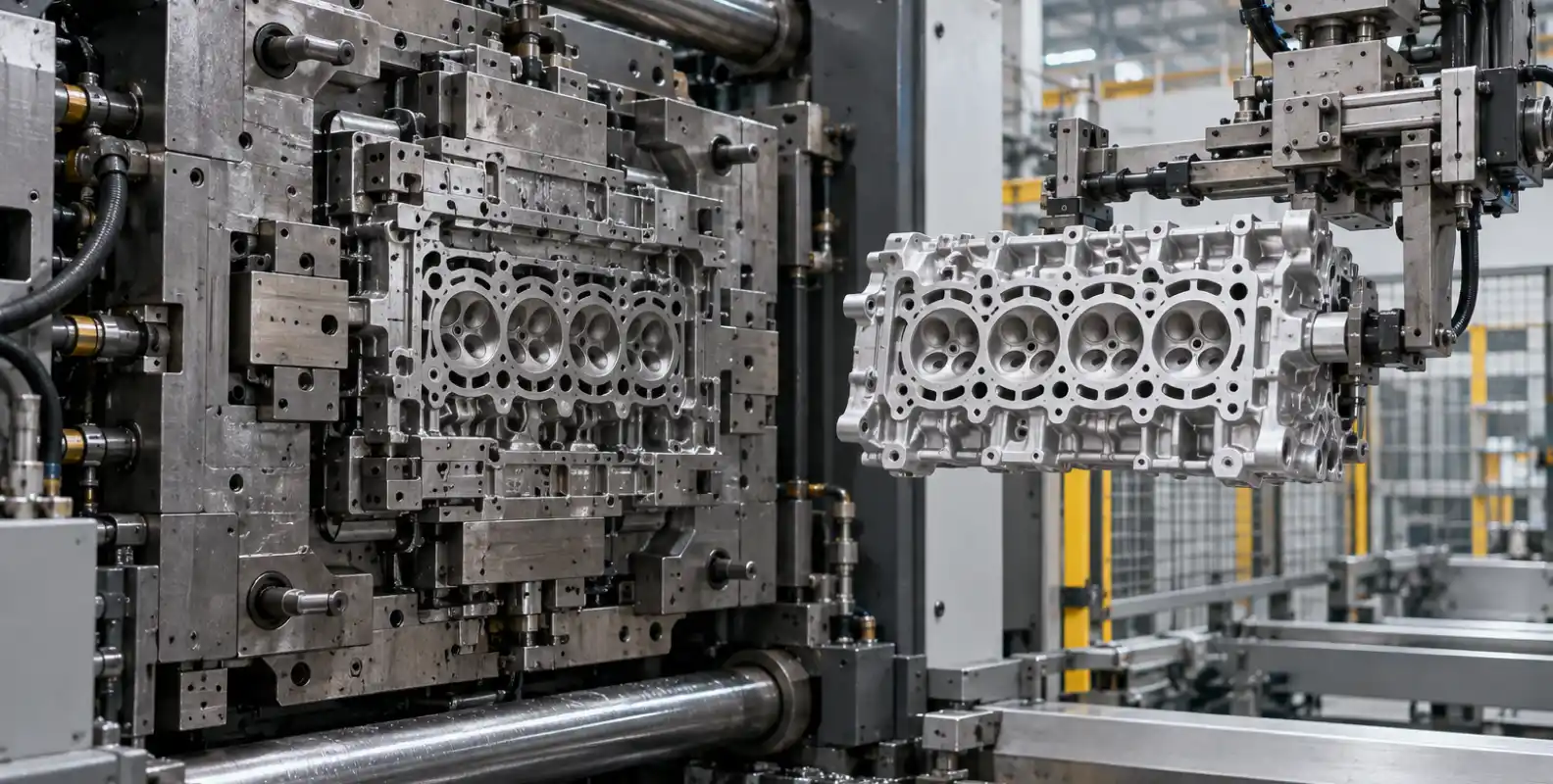
A356-T6: The Performance Casting Alloy
A356 is a lower-silicon, magnesium-bearing alloy cast by gravity or low-pressure methods and almost always used in the T6 condition — solution heat treated and artificially aged. The T6 cycle roughly doubles the yield strength of the as-cast material, and crucially, much of that strength survives at cylinder head operating temperatures.
A356 also conducts heat better than ADC12 and accepts welding cleanly, which opens repair and modification paths that die castings close. The trade-offs are cost and process speed: gravity and low-pressure casting cycles run far slower than die casting, the heat treatment adds time and handling, and as-cast surfaces need more machining. Unit prices land accordingly — A356-T6 heads cost more, and they earn it where the duty demands it.
Racing heads, high-compression builds and the classic platforms we cover on our classic motorcycle cylinder heads page lean toward A356-T6 for these reasons. A vintage head that may need combustion chamber welding during restoration has no business in die-cast silicon alloy.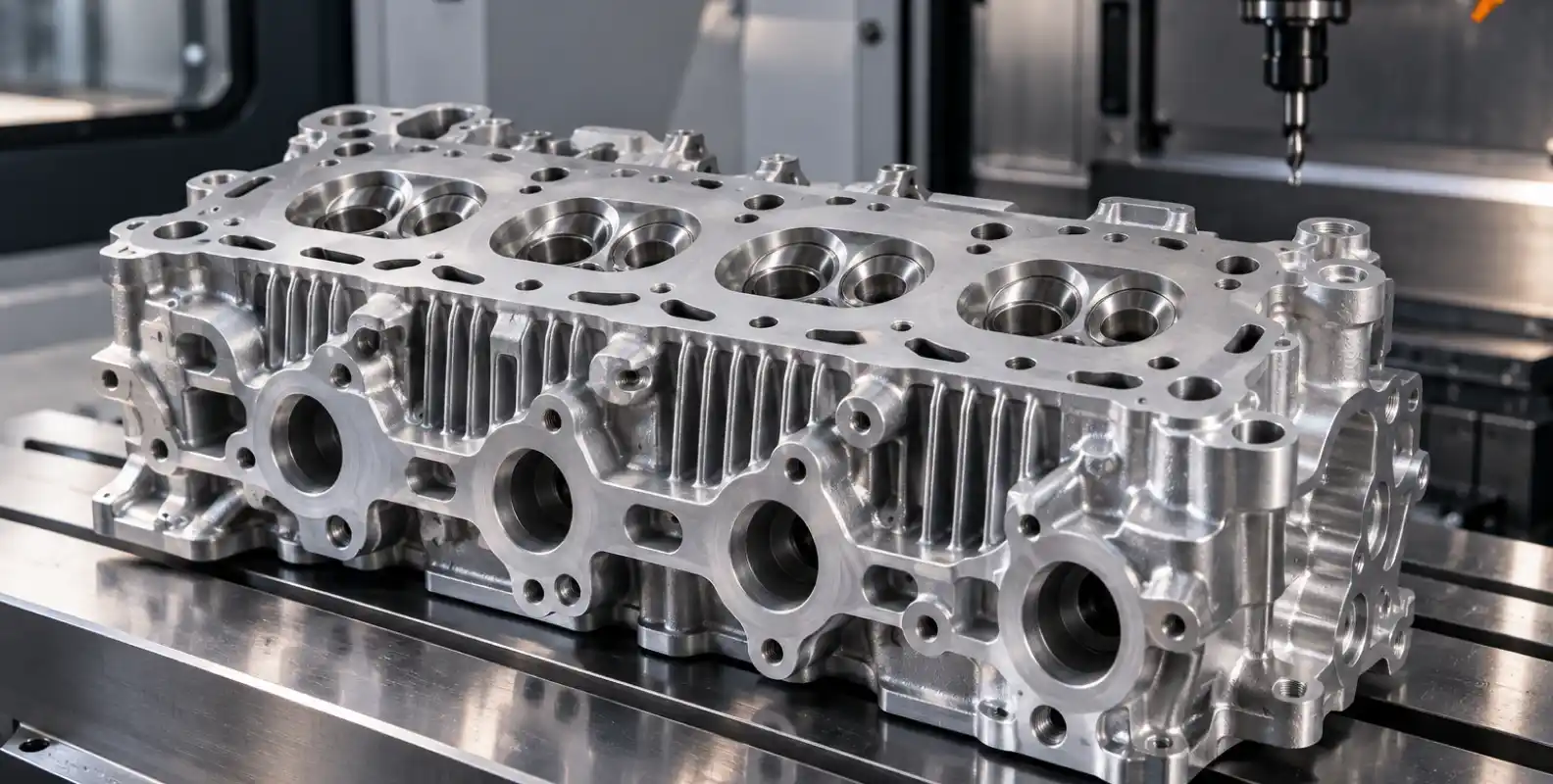
ADC12 vs A356-T6 at a Glance
| Property | ADC12 (die-cast) | A356-T6 (gravity / LP cast) |
|---|---|---|
| Casting process | High-pressure die casting | Gravity or low-pressure casting |
| Silicon content | ~10–12% | ~7% |
| Heat treatment | Used as-cast | T6 standard |
| Strength at 150–200°C | Modest | High |
| Thermal conductivity | Lower | Higher |
| Weld repair | Unreliable | Practical |
| Thin-fin fill | Excellent | Good, needs gating care |
| Unit cost at volume | Low | Higher |
| Best fit | Commuter, scooter, stock replacement | Racing, high-compression, vintage, custom |
Choosing by Application
The right alloy follows from the duty cycle, and most programs answer the question with three inputs: engine output per liter, expected service life between rebuilds, and whether the head will ever be modified or repaired.
Commuter and fleet platforms run at moderate specific output and sell on price. ADC12 wins here almost every time, provided the casting process control is there — melt cleanliness, shot parameters and venting decide jacket integrity far more than the alloy badge does.
Dirt bike and off-road aftermarket splits by intensity. Stock-spec replacement heads for play bikes sit comfortably in ADC12. Heads for race-prepped bikes running raised compression or long motos at temperature belong in A356-T6, where the bridge sections hold their strength through the season.
Vintage and restoration programs default to A356 for a practical reason: old heads get welded. Combustion chamber repair, fin reconstruction and seat-area work all demand an alloy that welds without porosity traps. Our KTM aftermarket cylinder heads work follows the same logic on the performance side — insert systems and tuning chambers are machined from billet or cast in alloys chosen for the duty, not the catalog price.
Racing and private-label performance lines should treat alloy as part of the specification document, alongside chamber volume and squish. A performance line published with an alloy and temper named in the spec sheet — A356-T6, with hardness verified per batch — is a line that survives its first customer teardown.
Three Mistakes Buyers Make With Alloy Specifications
The first mistake is specifying an alloy without a temper. A purchase order that reads "A356" without "T6" can be legally filled with as-cast material at half the expected strength. Write the temper into the specification, every time.
The second is assuming die casting means low quality. A well-controlled ADC12 line with clean melt practice and disciplined shot control produces heads that outlast careless gravity castings. Judge the process data, not the process label — porosity levels, hardness spread and leak-test results tell the truth that alloy names cannot.
The third is choosing for the average case instead of the worst case. A fleet head that spends ninety percent of its life commuting still needs to survive the ten percent spent at full load in summer traffic. Specify the alloy for the hardest hour the engine will see, and the rest of the service life takes care of itself.
What to Demand From a Supplier
Alloy choice is a specification, and specifications are only as good as their verification. On every batch, a serious head supplier should provide three documents: the melt certificate showing alloy composition, a spectrometer report confirming the actual melt against that certificate, and — for T6 material — hardness readings confirming the temper was achieved. These take minutes to produce and they are the difference between an alloy claim and an alloy.
Beyond paperwork, ask how the supplier controls the casting process. Melt treatment, die temperature control and venting layout determine porosity levels in jacket walls and fin roots, and porosity — in either alloy — is what turns a good specification into a cracked head. A supplier who answers these questions with process detail rather than adjectives is a supplier worth keeping.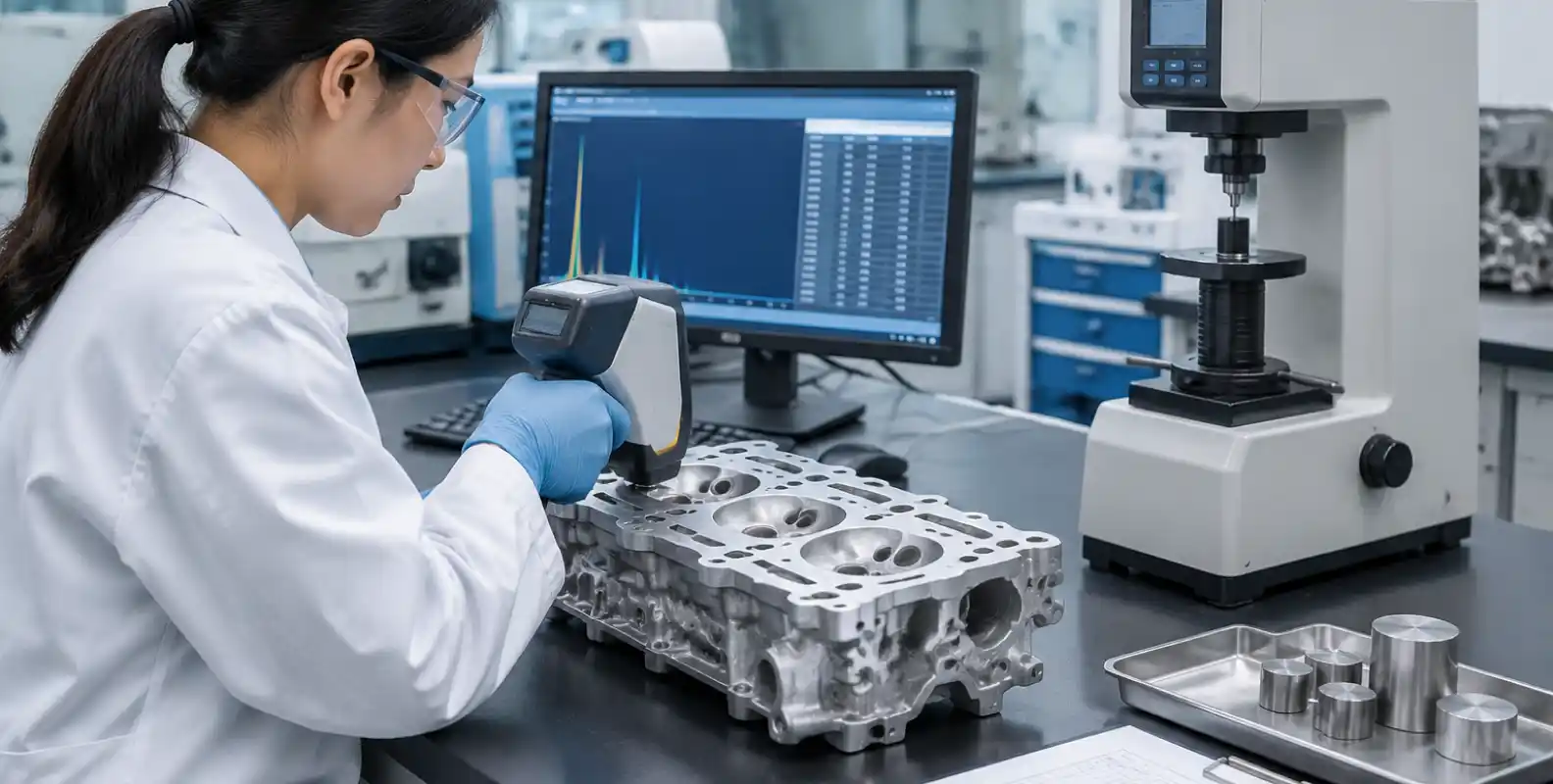
If you are specifying a new program or re-sourcing an existing one, send us the platform, the duty cycle and your target volumes. We cast and machine both ADC12 and A356-T6 in-house, and we will tell you plainly which alloy your application needs — including when the cheaper one is the right one.
-

Feiya Engineering Team
A dedicated group of manufacturing experts at Feiya Machinery since 2009. With a focus on DFM (Design for Manufacturing) and quality control, our team oversees the production of 5,000+ tons of aluminum castings annually. We share practical insights on tooling, metallurgy, and machining to help global buyers make informed sourcing decisions.