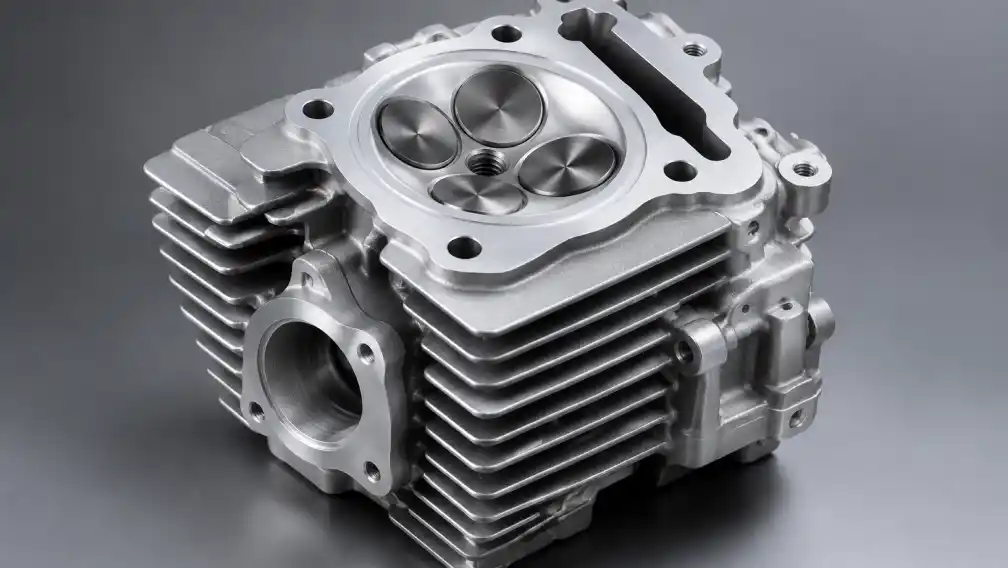
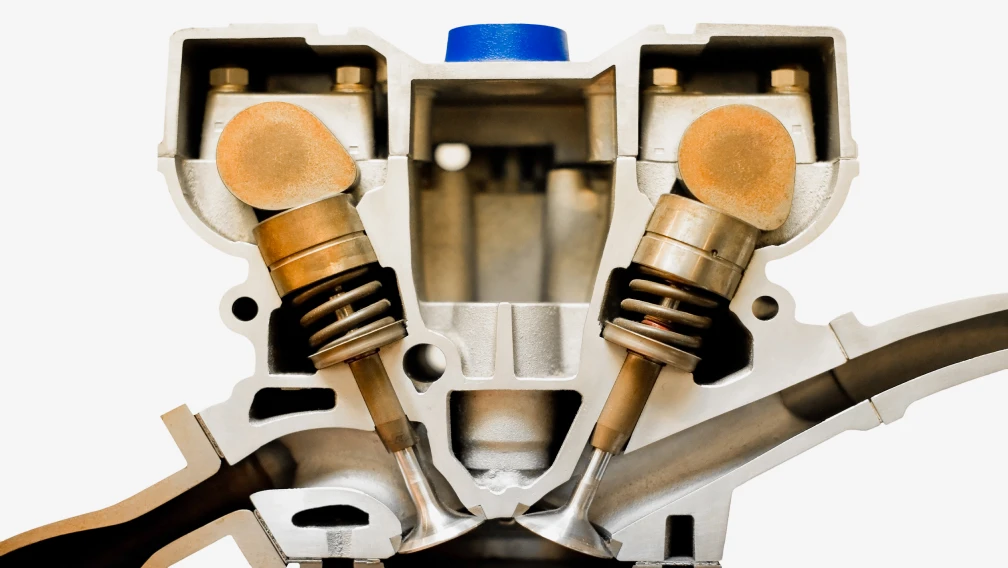
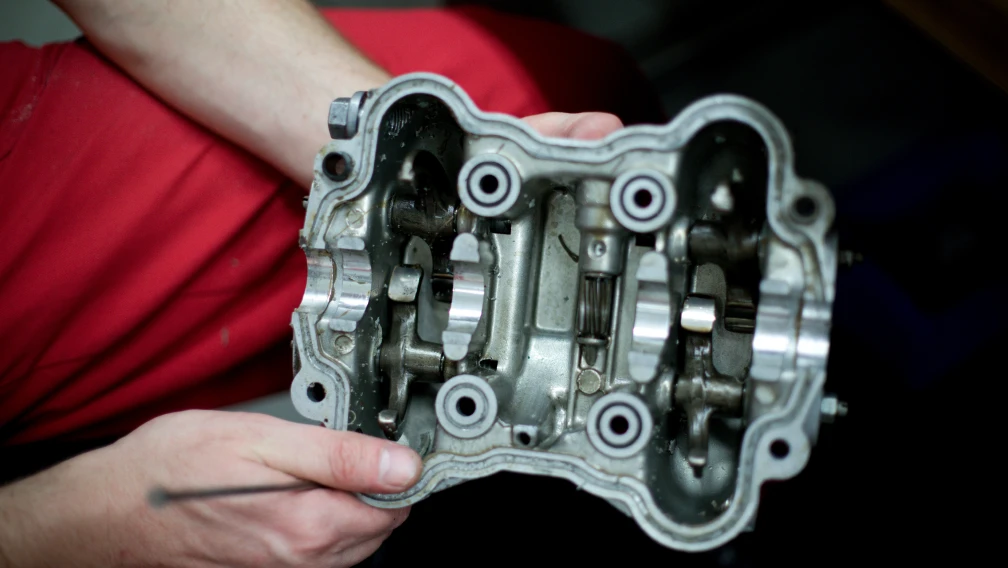
Ask a four-stroke crowd about cylinder heads and the talk turns to valves and seats. Ask two-stroke riders the same question and the conversation lands on one number: squish clearance. On a two-stroke, the head is a dome with no valve gear, yet that dome decides how the engine burns fuel, how it resists detonation and how much power it holds at temperature. That is why the two-stroke head market behaves like a tuning market, with riders buying compression variants and interchangeable inserts the way four-stroke owners buy exhausts.
This guide is written for distributors and performance shops who stock or specify two-stroke heads. It explains what squish is, how it interacts with compression ratio and chamber shape, how workshops measure it, why production heads leave the factory with margin built in, and what a serious supplier should document on each production run.
What Squish Clearance Actually Does
Squish clearance is the gap between the edge of the piston crown and the head's squish band when the piston sits at top dead center. On most motorcycle two-strokes that gap measures somewhere between six-tenths of a millimeter and one and a half. As the piston rises, it drives the mixture trapped in that band toward the center of the chamber at high speed, and that single motion does three jobs.
First, the turbulence mixes fuel and air thoroughly, so the charge burns faster and more completely. Second, the outward edge of the piston runs cooler, because the thin layer of gas in the band insulates it from the main combustion event. Third, and most important for engine survival, a correct gap purges the band of end gas. When the clearance is too wide, unburned mixture sits in the band, absorbs heat and self-ignites after the spark fires — the knocking called detonation, which sandblasts the chamber dome and can collapse a piston ring land in minutes. Tuners sometimes describe the target in terms of maximum squish velocity, the speed of the gas leaving the band; classic tuning practice puts the useful window around fifteen to thirty meters per second, with supercross heads at the top of it.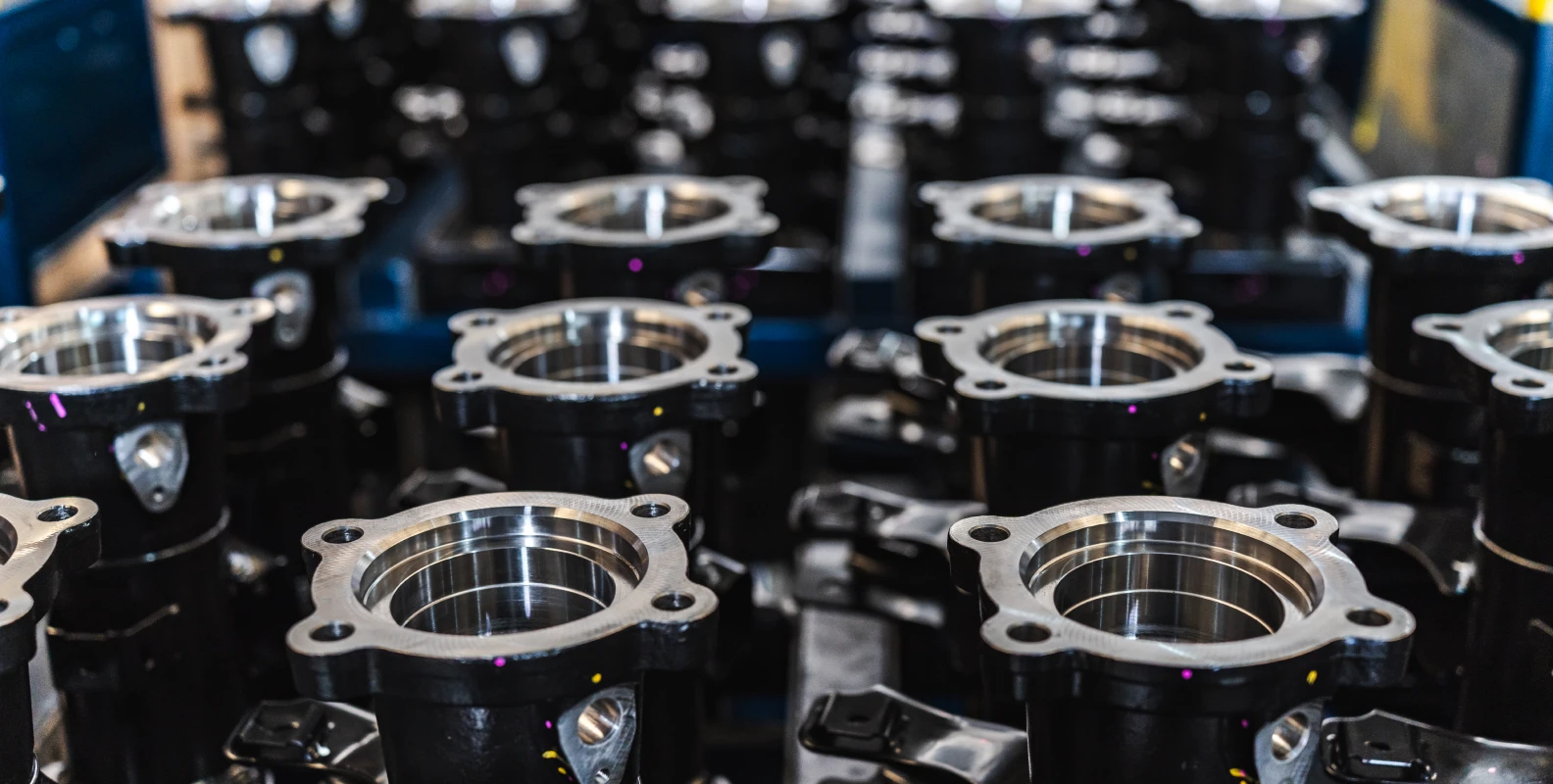
Squish, Compression and Chamber Shape: Three Dials, One Outcome
Compression ratio on a two-stroke needs a caveat before any number means anything. The geometric ratio uses the full stroke; the trapped, or corrected, ratio measures only from the moment the exhaust port closes. Trapped is the figure that describes what the engine actually feels, and comparisons between heads are meaningless unless both sides state which convention they use. Classic tuning references put the practical ceiling for a chamber without a squish band near six-to-one trapped, while a well-designed squish head supports figures approaching eight-and-a-half to nine-and-a-half in race applications.
Chamber geometry sets the power character. A small, deep chamber with a wide squish band — around sixty percent of bore area — and a higher ratio builds turbulence and suits low-to-mid power for trail and enduro work. A wide, shallow chamber with a narrow band of thirty-five to forty-five percent favors high-rpm power. Compression itself rewards restraint on a two-stroke: the gains are smaller than an equivalent increase on a four-stroke, and manufacturers often ship engines close to the practical limit already. A ratio that looks impressive on a short dyno pull can lose power once the engine reaches full temperature; sustained output wins races.
| SETUP TARGET | CHAMBER | SQUISH BAND | CHARACTER |
|---|---|---|---|
| Low-to-mid power (trail, enduro) | Small diameter, deep | Wide, ~60% of bore area | High turbulence, strong pull off the bottom |
| High-RPM power (road race, MX) | Wide, shallow | Narrow, ~35–45% of bore area | Breathing room at the top of the rev range |
| Pump-fuel endurance | Moderate depth | Moderate width, clearance toward the safe end | Detonation margin on variable fuel quality |
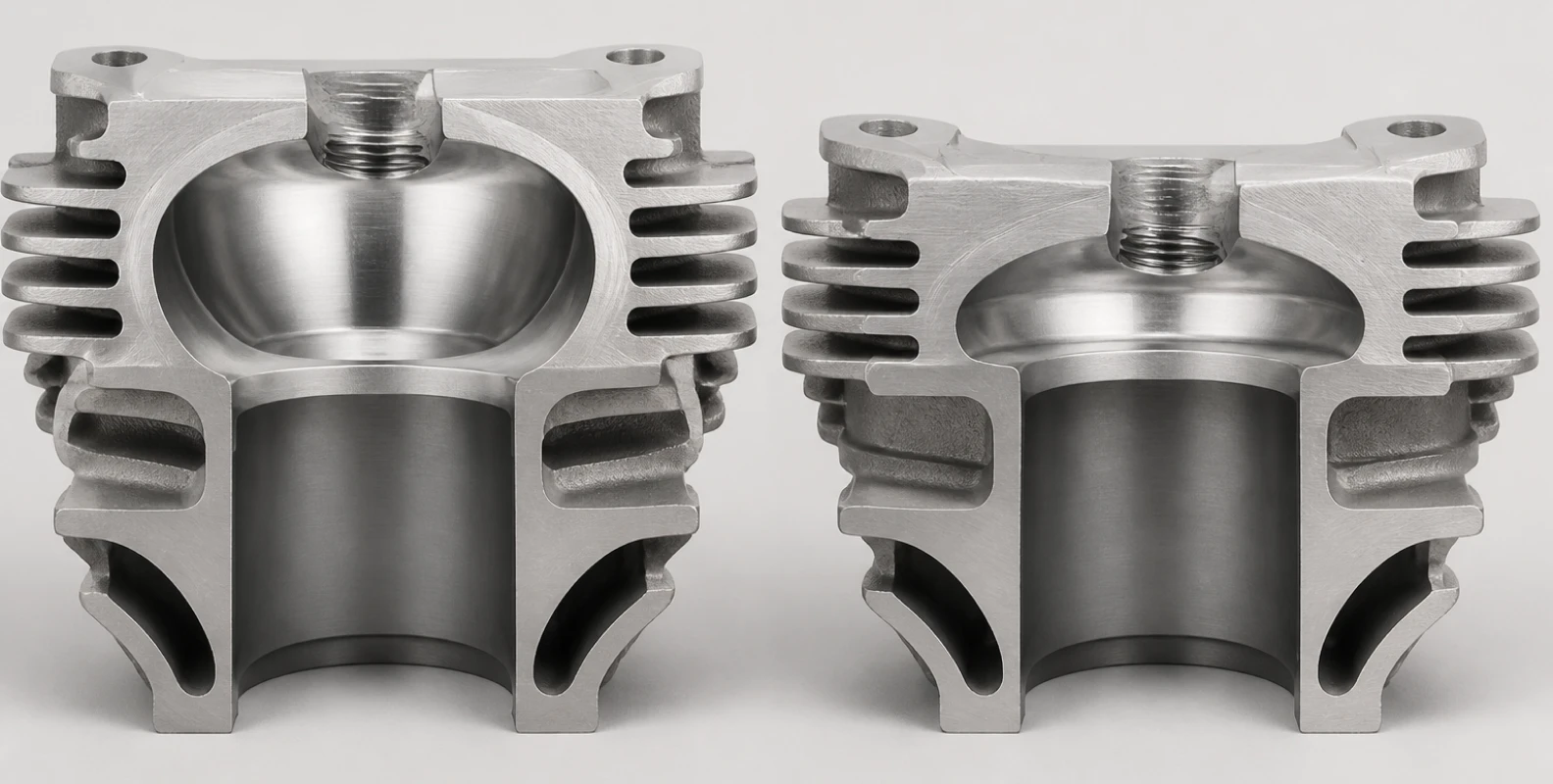
How Workshops Measure Squish
The standard method uses soft resin-core solder. A short length goes in through the spark plug hole, bent so the tip reaches the edge of the bore and sits parallel to the wrist pin — that orientation cancels most of the error from piston rock. The engine is turned over slowly by hand, the piston crushes the solder against the band, and the flattened ends are measured with a micrometer or caliper. Serious shops take three samples and average them, because one crush can mislead. Solder thickness matters too: around one-point-eight millimeters suits an 85 or 125, while a 250 or 300 needs two and a half to three.
Measure after any top-end work — new head, new piston, skimmed deck, different gasket. A base gasket change alters squish and compression together, since the whole cylinder rises or sinks. Classic tuning manuals publish minimum clearances by displacement, and they remain useful workshop references:
| CYLINDER SIZE | MINIMUM SQUISH CLEARANCE |
|---|---|
| 50–80 cc | 0.6–0.8 mm |
| 100–125 cc | 0.7–0.9 mm |
| 175–250 cc | 1.0–1.4 mm |
| 300–500 cc | 1.1–1.5 mm |
These are floors, not targets. The margin exists because pistons rock in worn bores, rods stretch at high rpm, and carbon builds up in the band over hours of running. An engine-specific specification always overrules a general table.
Reading a Used Head: What the Dome Tells You
A used two-stroke head is a diagnostic record, and shops that buy cores or assess trade-ins learn to read it. A healthy dome shows an even, light tan deposit. A sandblasted or pitted appearance around the band marks detonation — the engine ran too lean, too hot or on fuel below the octane the setup needed. Aluminum splash marks on the dome mean contact: the piston crown reached the head, pointing to clearance gone, a failing bearing or serious over-revving. A dome washed clean in one area suggests a leak past the gasket or a plug seat problem. These readings matter commercially as well as technically: a supplier grading used cores on appearance alone will pass detonation-damaged chambers into stock, and the buyer inherits the failure.
Why Production Heads Ship Loose — and Where the Aftermarket Steps In
Factories build engines to a tolerance stack: gasket thickness, deck height, casting dimensions and piston variation all add up. To guarantee that the worst possible stack still clears the piston, production heads ship with generous squish clearance, and the engine gives away turbulence and detonation margin as a result. That gap between what the factory ships and what the engine can use is the entire basis of the two-stroke tuning head market.
The aftermarket answers in three formats. Fixed-chamber heads machined to tighter specifications suit standard replacement with a performance edge. High-compression variants serve markets running race fuel or riding at elevation, where thinner air allows more ratio. Insert-type systems split the head into a machined shell and a replaceable combustion chamber, so one shell covers several setups and a compression change costs an insert swap instead of a new head — the format the KTM two-stroke scene made mainstream, and one we cover in our KTM aftermarket cylinder heads range.
One caution applies wherever an existing head is skimmed to tighten squish: removing material from the deck raises compression along with it. Classic workshop practice on a fifty-percent squish band calls for deepening the chamber by roughly twice the amount skimmed to hold the original ratio. That is machining work with measuring equipment, a service described on our performance cylinder head services page — and a reason to be skeptical of any supplier who tightens squish without documenting what happened to the chamber volume.
What Distributors Should Demand From a Two-Stroke Head Supplier
Two-stroke buyers measure things. Your customers include race teams with micrometers and workshops that check chamber volumes as routine, so the supplier's documentation becomes your credibility. Four points separate a serious two-stroke head program from a casting seller:
- Measured chamber volumes per batch. A nominal figure printed in a catalog is a guess; a volume measured and recorded on each batch is a specification. The records should ship with the goods.
- Squish specifications by displacement class. The supplier should state the clearance each head is machined for, and the figure should land inside the accepted window for that cylinder size.
- Insert interchangeability across seasons. An insert program only works if an insert bought next year seats in a shell sold this year. Ask what tolerance window shells and inserts are machined to.
- Generation discipline. On recent enduro platforms, carbureted and fuel-injected generations carry different chamber specifications, and the two do not interchange. Catalogs that merge them create returns.
The platform context for this demand — motocross, enduro and mini-class racing — is mapped on our dirt bike cylinder heads page.
Heads That Ship With Their Numbers Attached
We machine two-stroke heads and inserts with squish clearance and chamber volume recorded on every batch, in fixed-chamber, high-compression and insert-type formats. Send us the model, the fuel your market runs and the elevation it rides at, and we will recommend a starting specification and back it with batch documentation.
-

Feiya Engineering Team
A dedicated group of manufacturing experts at Feiya Machinery since 2009. With a focus on DFM (Design for Manufacturing) and quality control, our team oversees the production of 5,000+ tons of aluminum castings annually. We share practical insights on tooling, metallurgy, and machining to help global buyers make informed sourcing decisions.