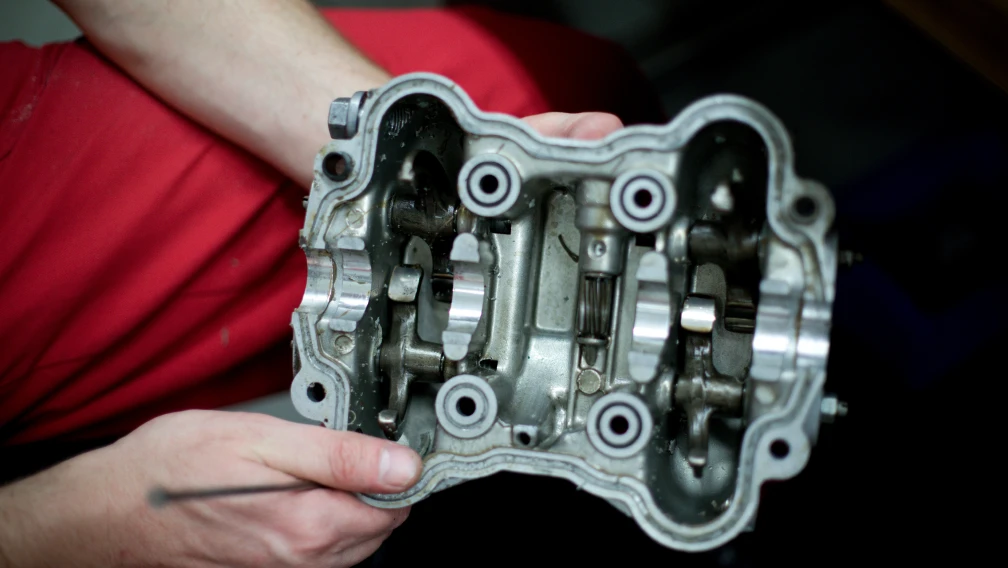
The first two weeks of November 2026 delivered the clearest production roadmap for motorcycle internal combustion engines in several years. Across EICMA 2026 in Milan (November 3–8) and subsequent regional model launches through mid-November, major Japanese, European, and Chinese manufacturers unveiled an unusually dense slate of new and heavily revised 2027 powertrains. Electric concepts remained on display, yet production engineering budgets stayed firmly anchored in higher-output, Euro 5+ compliant internal combustion platforms.
For aftermarket distributors, performance brands, and OEM component buyers, these announcements establish the technical specifications that will govern replacement demand and custom tooling over the next three to five years. Displacement increases, higher compression ratios, forced-induction road engines, finger-follower valvetrains moving into mid-size classes, and new fuel-injected two-strokes all raise the metallurgical and machining bar for cylinder head suppliers. This briefing reviews the primary engine launches from November 2026 and maps their direct impact on cylinder head manufacturing and procurement.
Five Powertrain Developments From November 2026 Worth Tracking
Five announcements from early to mid-November stand out for their direct implications on cylinder head design, casting complexity, and aftermarket SKU planning.
1. Honda Expands High-Output ICE Platforms Across Four Engine Families
At EICMA 2026 on November 3, Honda introduced four distinct combustion engine updates spanning adventure, supersport, middleweight, and forced-induction segments. The redesigned 2027 CRF1150L Africa Twin expands its parallel-twin displacement from 1,084 cc to 1,131 cc via a 94 mm bore while retaining its four-valve-per-cylinder Unicam SOHC cylinder head. Higher compression and revised intake and exhaust tracts lift output from 102 hp to 119 hp (87.5 kW) at 7,500 rpm and torque to 119 Nm at 5,750 rpm. Alongside it, the 2027 CBR1000RR-R Fireblade series incorporates roughly 75 percent newly designed components and adds a two-stage variable-length intake air funnel system to its high-revving DOHC inline-four.
Honda also moved its V3R 900 E-Compressor to planned production status, pairing a proprietary V-three engine with an electronically controlled compressor, and debuted the middleweight inline-four CBR500R FOUR in Europe. For suppliers tracking Honda cylinder heads, this lineup confirms continued platform investment in both compact Unicam heads and high-density multi-cylinder DOHC castings.
2. Kawasaki Unveils Fuel-Injected KX327 and KX327X Two-Strokes
Kawasaki used EICMA 2026 to display the 2027 KX327 and KX327X fuel-injected two-stroke off-road motorcycles. Introducing a fresh two-stroke platform with electronic fuel injection confirms that off-road competition demand for two-stroke top ends remains durable alongside four-stroke motocross lines. Because modern fuel-injected two-strokes run leaner air-fuel ratios to control emissions and crisp throttle delivery, combustion chamber volume accuracy and squish clearance consistency become critical to preventing detonation. Distributors serving Kawasaki cylinder heads and off-road race workshops should factor sustained two-stroke head demand into 2027–2028 inventory plans, applying the dimensional tolerances outlined in our two-stroke cylinder head squish guide.
3. Triumph Revises Top-End Hardware on the Street Triple 798 RS
On November 18, Triumph launched the Street Triple 798 RS, replacing the outgoing 765 RS with an enlarged 798 cc triple that adds 5 bhp and 6 Nm across the rev range. Triumph explicitly attributed the output gain to a revised cylinder head, updated camshaft profiles, new valves, and an optimized intake system informed by its Moto2 racing program. This launch illustrates a broader industry pattern: OEMs are extracting incremental performance from existing engine architectures through top-end redesigns rather than clean-sheet crankcases, creating distinct model-year cylinder head part numbers even when external engine silhouettes appear similar.
4. Euro 5+ Mid-Displacement Engines Adopt Finger-Follower DOHC
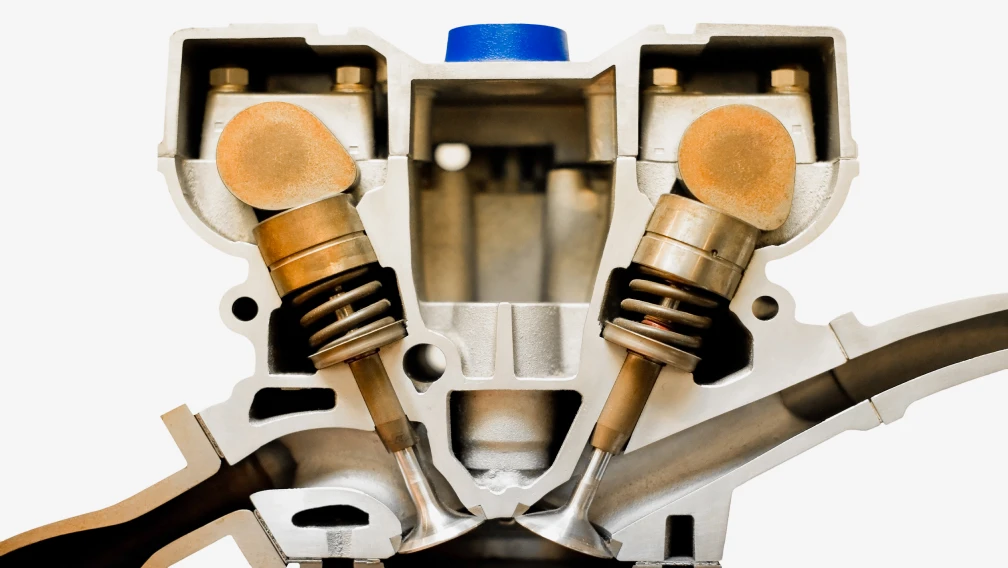
At EICMA 2026, Fantic detailed its Motori Minarelli-built 463 cc liquid-cooled, four-stroke single featuring a DOHC four-valve valvetrain with finger followers certified to Euro 5+. Finger-follower actuation—historically concentrated in liter-class superbikes and 250–450 cc motocross racers—is migrating steadily into 400–500 cc street and dual-sport engines to reduce valvetrain inertia, support sharper cam profiles, and preserve power under stricter exhaust regulations.
5. Chinese OEMs Push Into High-Output Multi-Cylinder Displacement Tiers
Chinese manufacturers accelerated their move into 500–900 cc multi-cylinder segments at EICMA 2026. QJMotor unveiled the Rino 900 adventure motorcycle powered by a 900 cc liquid-cooled DOHC 12-valve inline-three rated at 119.7 PS (88 kW) at 10,000 rpm and 93 Nm at 8,000 rpm. CFMOTO introduced a 527 cc parallel-twin producing 54 hp at 8,500 rpm alongside its 675 cc triple platform. As these engines enter European and North American fleets in volume, aftermarket demand for multi-cylinder liquid-cooled castings with strict thermal and dimensional stability will expand beyond traditional Japanese and European nameplates.
| Release (Nov 2026) | Engine Architecture | Key Top-End Update | Cylinder Head Manufacturing Implication |
|---|---|---|---|
| Honda CRF1150L Africa Twin | 1,131 cc parallel-twin, Unicam SOHC | 94 mm bore, higher compression, +17 hp | Higher combustion loads; stricter deck flatness and T6 hardness control |
| Honda CBR1000RR-R / V3R 900 | 1,000 cc DOHC I4 / 900 cc E-Compressor V3 | Variable intake funnel; forced induction | Dense A356-T6 water jackets; zero micro-porosity under boost |
| Kawasaki KX327 / KX327X | Fuel-injected two-stroke single | New EFI off-road top-end package | Tight ±0.2 cc chamber volume and squish-band machining |
| Triumph Street Triple 798 RS | 798 cc DOHC inline-three | Revised head, valves, cams, intake | Platform-specific port symmetry and multi-angle seat concentricity |
| Fantic / Minarelli 463 cc & QJMotor Rino 900 | 463 cc DOHC single / 900 cc DOHC I3 | Finger-follower DOHC; 10,000 rpm I3 | Tighter cam-bore coaxiality and pivot-boss positional accuracy |
Four Engineering Shifts Raising Cylinder Head Manufacturing Thresholds
Looking across these releases reveals four structural engineering trends that directly affect how cylinder heads are cast, heat-treated, machined, and inspected.
Higher Compression Ratios and Forced-Induction Pressure Loads
Increasing static compression ratios—as seen on the 1,131 cc Africa Twin—and introducing electrically boosted production engines like the V3R 900 raise peak cylinder pressures and gasket clamping stresses. Under these loads, head deck distortion beyond 0.03–0.05 mm compromises multi-layer steel (MLS) gasket sealing. Castings must maintain uniform yield strength at elevated operating temperatures through controlled T6 heat treatment, paired with tight chamber volume repeatability to prevent localized knock, a relationship analyzed in our guide to compression ratio and squish design.
Wider Adoption of Finger-Follower Valvetrains
As finger-follower DOHC layouts move down from flagship superbikes into 450–900 cc street and adventure engines, machining complexity increases across standard production lines. Finger-follower heads require precise pivot bosses, tight valve seat-to-guide concentricity (typically within ±0.005 mm on high-revving platforms), and accurate line-boring of bolted camshaft bearing caps. Achieving this repeatability at scale depends on multi-axis CNC datum control rather than multi-fixture manual setups, as detailed on our motorcycle cylinder head machining page.
Thermal Stress Under Euro 5+ Calibration
Euro 5+ emissions compliance relies on tighter stoichiometry and catalyst light-off strategies that elevate exhaust gas temperatures around the exhaust valve bridges and port throats. For air-cooled commuter engines, high-pressure aluminum die casting with ADC12 remains cost-effective. For high-output liquid-cooled 2027 platforms, however, low-porosity gravity-cast A356 aluminum is required to sustain thermal cycling without valve-bridge cracking or coolant-jacket seepage. The metallurgical trade-offs governing alloy selection are documented in our ADC12 vs. A356 cylinder head alloy comparison and our thermal management engineering brief.
Multi-Cylinder and Off-Road Port Consistency
Inline-three and inline-four platforms such as the Street Triple 798 RS, CBR500R FOUR, and Rino 900 amplify the impact of sand-core shift. Even minor port wall misalignment between cylinders creates measurable airflow imbalance across the bank. Similarly, high-load off-road dirt bike cylinder heads and competition two-strokes require consistent water-jacket wall thickness and smooth port transitions to maintain stable operating temperatures during sustained moto use. Core-box precision and post-casting verification—outlined in our port and chamber reshaping analysis—separate reliable castings from high-warranty stock.
Supply-Chain and Inventory Implications for Distributors and OEM Buyers
When OEMs revise top-end assemblies across established nameplates, aftermarket and tier-2 supply chains feel the effect in two ways: faster SKU fragmentation and stricter incoming quality requirements.
First, mid-cycle engine enlargements—such as Honda moving from 1,084 cc to 1,131 cc or Triumph moving from 765 cc to 798 cc—mean distributors cannot assume cross-compatibility across model years. Procurement teams must map OE part numbers, bore sizes, and bolt patterns carefully when planning 2027–2029 stock, applying the catalog discipline outlined in our motorcycle cylinder head buyer’s guide.
Second, as more mid-displacement engines run higher compression and finger-follower DOHC hardware, incoming inspection can no longer rely on visual checks. Buyers should require batch-level spectrometer reports, T6 Brinell hardness verification, CMM dimensional sheets, and 100% pressurized coolant-jacket leak test records before releasing crates to warehouse stock. Our cylinder head batch inspection checklist details the exact acceptance thresholds and workbench tools required to enforce these standards.
| Buyer Segment | Demand Horizon | Primary Technical Focus | Recommended Sourcing Action |
|---|---|---|---|
| Aftermarket Distributors | 18–36 months post-launch | OE cross-reference accuracy, T6 hardness, leak-free jackets | Audit supplier batch records and lock A356-T6 specs for liquid-cooled SKUs |
| Performance & Race Brands | 6–18 months post-launch | Port symmetry, ±0.2 cc chamber volume, ±0.005 mm seat runout | Initiate 3D scanning or CAD DFM early for bare CNC-finished heads |
| OEM Tier-2 Programs | Immediate (2027–2028 MY) | Multi-cylinder core stability, 5-axis CNC repeatability, PPAP/FAI | Qualify foundries with integrated gravity casting, heat treatment, and CMM |
For aftermarket brands developing early replacement or upgraded performance cylinder heads for emerging 2027 platforms, waiting until volume warranty failures appear creates a 6-to-12-month tooling lag. Starting mold-flow simulation, sand-core design, or optical 3D reverse engineering ahead of peak fleet mileage allows tooling qualification and First Article Inspection (FAI) to complete before distributor demand accelerates. Full engineering pathways for build-to-print and sample-based development are detailed on our custom manufacturing and manufacturing capabilities pages.
Preparing Your 2027 Cylinder Head Sourcing Roadmap
The November 2026 product cycle confirms that internal combustion motorcycle engines are becoming more thermally dense and mechanically precise rather than simpler. Qualifying casting and machining partners capable of holding A356-T6 metallurgical integrity, tight multi-axis CNC datums, and documented batch traceability protects your margin as these 2027 platforms enter global fleets.
If you are planning 2027–2028 aftermarket SKU coverage, custom race castings, or OEM build-to-print cylinder head production, contact our engineering team with your target engine platforms, OE reference numbers, or CAD files. We provide alloy and process recommendations, tooling timelines, and documented quality standards backed by our quality certifications.
-

Feiya Engineering Team
A dedicated group of manufacturing experts at Feiya Machinery since 2009. With a focus on DFM (Design for Manufacturing) and quality control, our team oversees the production of 5,000+ tons of aluminum castings annually. We share practical insights on tooling, metallurgy, and machining to help global buyers make informed sourcing decisions.