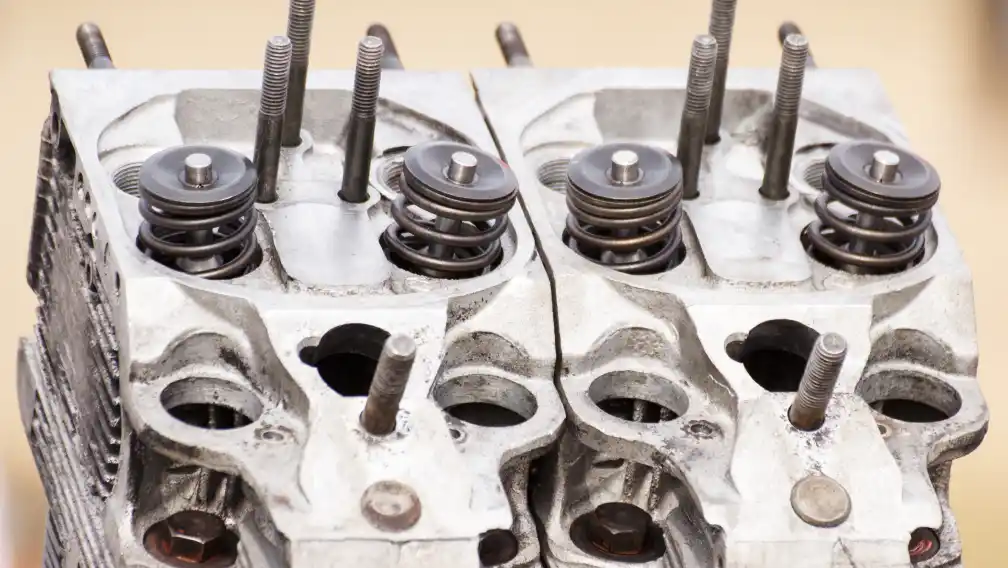
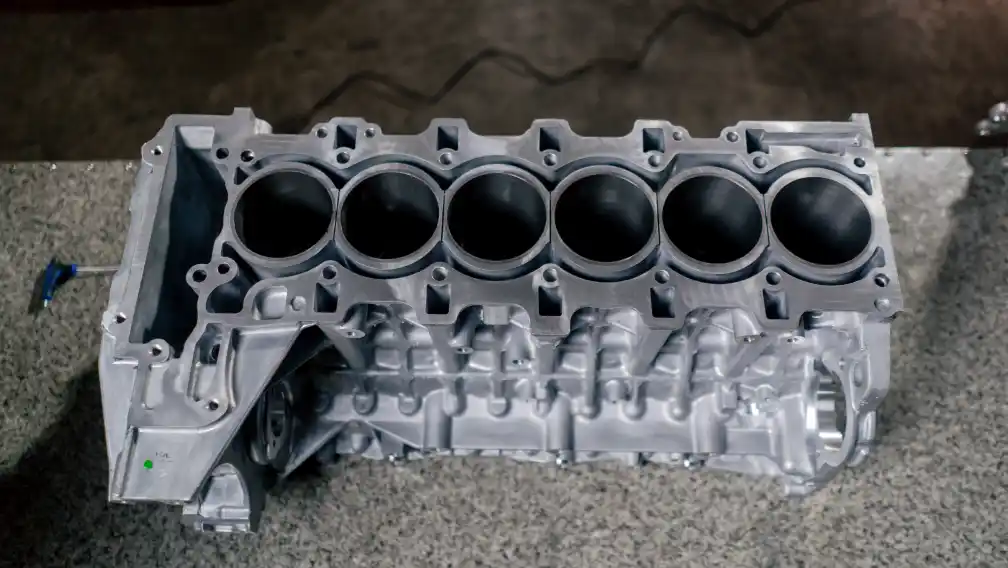
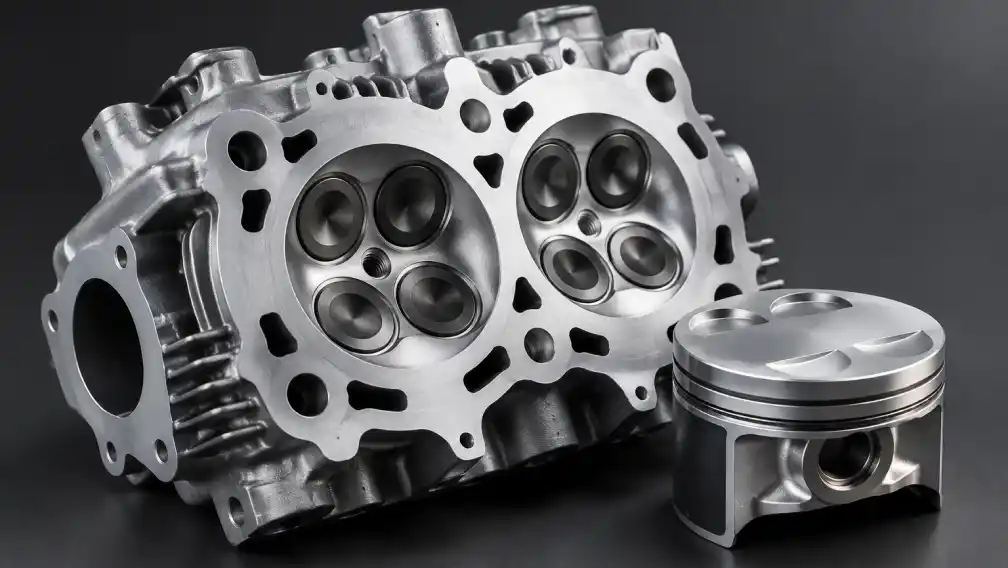
Every workshop that handles motorcycle top ends answers the same question several times a week: repair this head or replace it. The answer turns on four things — the type of damage, the alloy, the value of the platform, and the standard the repair will be held to. A repair executed and documented to specification returns the head to service with its reliability intact. A repair priced to win the job returns the same head as a warranty claim, usually within one season.
This guide sets out how we assess, repair and document motorcycle cylinder heads. It is written for workshop owners, fleet maintainers and distributors who run core programs. It covers the inspection sequence, the repair-or-replace decision by damage type, welding and resurfacing standards, thread and seat repair, and the paperwork that separates a professional repair from a gamble.
Diagnose before you quote: the inspection sequence
A credible repair starts with a complete diagnosis, and the diagnosis starts with a clean head. Strip the components, remove carbon from the chamber and scale from the deck, then work through four checks. Dye penetrant finds surface-breaking cracks in the chamber, the port throats and the fin roots — it is cheap, portable, and it reads the areas a mirror cannot reach. A pressure-hold test pressurizes the cooling jacket and watches for decay, which reveals porosity and wall breakthroughs that no surface inspection can see. A straightedge and feeler gauges measure deck warp against the service-manual limit. A borescope through the plug hole finishes the job inside the chamber.
A cylinder head qualifies for repair when the damage is local, the structure around it is sound, and the result can be verified by test. It does not qualify when a crack runs between the valve seats, when the deck sits beyond the machining allowance, or when porosity turns up in every wall you test. Quoting before these checks is how repair programs lose money.
The repair-or-replace decision by damage type
The table below maps the damage patterns we see most, the repair route for each, and the condition that ends the argument in favor of replacement.
| Damage | Repair route | Replacement wins when |
|---|---|---|
| Hairline crack in a fin or non-structural wall | TIG weld, alloy-dependent | Crack reaches a seat bore or the jacket |
| Crack between valve seats | Weld out, re-machine seat bores | Crack bridges both seats or bores distort |
| Warped deck within machining allowance | Resurface, re-profile chamber | Warp beyond allowance or deck already at the skim limit |
| Stripped spark plug thread | Keyed thread insert | Boss cracked or a previous insert has failed |
| Receded or sunk valve seats | Replace inserts, three-angle cut | Seat bores oversized, cracked or loose |
| Worn valve guides | Replace and hone to stem spec | Guide bores cracked or shifted in the casting |
| Jacket porosity, failed pressure-hold | No reliable repair | Welds over porous metal leak again under thermal cycling |
Two rows deserve emphasis. A crack between the seats is the most common walk-away in our shop, because the seat bores move during welding and concentricity rarely comes back. Jacket porosity is the second, because a weld laid over porous metal is a patch on a sieve.
Crack repair by welding: where it holds and where it fails
Most cracks arrive as thermal fatigue, and prevention starts at casting design — the subject of our thermal management program for racing heads. Once the crack exists, the alloy decides whether welding is on the table at all. A356 responds well: groove out the crack, drill stop-ends, preheat the casting to roughly 150–200 degrees, TIG with a matching filler, apply post-weld heat treatment, then re-machine and re-test. Done in that order, the repair zone carries load close to parent metal. ADC12 is a different case; the porosity trapped at casting reopens under thermal cycling, and a weld that looks sound in the shop cracks again in service. We covered the metallurgy behind this in our ADC12 versus A356 guide for cylinder heads, and its conclusion governs our acceptance rules: die-cast heads receive weld repairs only in non-structural areas, or not at all.
Verification is not optional. All welds are dye-penetrant checked after cooling and again after final machining, and every welded jacket goes back through the pressure-hold test. A weld you cannot test is a weld you do not ship. Older cast iron heads, common on early vintage platforms, follow a different craft — brazing or lock-and-stitch repair — and the platform constraints sit in our vintage motorcycle cylinder heads range.
Resurfacing the deck: flatness has a budget
Every skim spends material, and the budget is fixed. Most service manuals set the deck flatness limit around 0.05 mm, and most castings allow only a few hundredths of a millimeter of removal before chamber volume and deck height fall out of specification. We measure with a straightedge during assessment and record flatness on the CMM when the repair proceeds.
Deck work never happens alone. Removing material raises the compression ratio, shifts valve events slightly and changes valve-to-piston clearance. The chamber is re-profiled to its target volume after surfacing, and clearances are verified at assembly — the same discipline described in our guide to compression ratio and squish design for racing heads. The finishing sequence around it — seats cut after pressing, decks machined flat, journals aligned — matches the documented process on our motorcycle cylinder head machining page. Finish matters as much as flatness: the gasket maker specifies the surface finish, and a mirror polish on a composite-gasket deck is a leak looking for a weekend.
Thread repair: a second life for the plug boss
The spark plug boss carries the most repaired thread in the engine. Aluminum threads fail from over-torque and cross-threading, and the fix is a keyed thread insert installed square, to full engaged length, with the plug seat re-faced on the same setup. A keyed insert seats against the bottom of the counterbore and holds torque through heat cycles better than a plain coil. When the boss itself is cracked, or a previous insert has already failed, replacement is the honest answer — a second repair in the same boss is a failure you have scheduled.
Seats and guides: the wear behind half of all head work
Seat recession drives a large share of head work on both ends of the market. Unleaded fuel wears the unhardened seats of older engines; titanium valves pound modern seats into shorter service intervals. The repair is mechanical: press out the old insert, press in a new one of the correct alloy, cut the three working angles, and check installed height, concentricity and throat diameter against the specification. Guides follow the same logic — replace, hone to stem clearance, and verify the seal before the head leaves the bench. Motocross and enduro platforms consume this hardware fastest; their platform coverage sits in our dirt bike cylinder heads range, and the season-driven demand behind them is why workshops stock repair hardware alongside complete heads.
What a documented repair ships with
A professional repair carries the same paperwork as a new casting. Our repair report includes a crack map with photographs before and after welding, the weld procedure and filler specification, dye-penetrant results, the pressure-hold reading, deck flatness and surface finish, chamber volume, seat runout and — on T6 material — hardness confirmation. The report is indexed to the head’s serial number and ships with the part. Anything less asks the customer to trust a weld they cannot see.
The economics for distributors and fleets
Repair earns its place on high-value platforms and scarce castings — vintage restorations, racing heads from discontinued models, fleet engines where downtime costs more than the part. It also earns its place when failures repeat: a workshop seeing the same cracked platform across a fleet is looking at a usage or cooling problem, and repair buys time to fix the cause. Replacement wins on low unit value, structural damage and undocumented cores. Grade every core on arrival against the inspection sequence above, and never pay salvage prices for scrap. For distributors, the category logic is the same as for new heads: replacement demand is structural and failure-driven, and the sourcing discipline is mapped in our motorcycle cylinder head buyer’s guide.
Send the head, get a straight answer
Send us the damaged casting with a short note on how it failed — overheating, detonation, mileage or a core purchase gone wrong. We return a damage report with a repair route and a fixed cost tier, or a plain recommendation to replace, including the cases where the cheaper answer is a new head from our range. Either way, the recommendation comes with numbers behind it.
-

Feiya Engineering Team
A dedicated group of manufacturing experts at Feiya Machinery since 2009. With a focus on DFM (Design for Manufacturing) and quality control, our team oversees the production of 5,000+ tons of aluminum castings annually. We share practical insights on tooling, metallurgy, and machining to help global buyers make informed sourcing decisions.